Holborn is a Central City neighborhood with sitting just west of the City of London. The neighborhood has roots in the ancient parish of Holborn, which lay on the west bank of the now buried River Fleet. The westward growth of London beyond the City Wall, and towards the seat of government in Westminster, took place along the banks of the River Thames and along the roads leading from Ludgate (Fleet Street and The Strand) and Newgate (Holborn/High Holborn). The westward growth towards Westminster accelerated in the 16th century(the Tudor Era) and the Fire of London in 1666 pushed growth in Holborn further northward away from the Thames River. The northern fringe of Holborn filled in during the 18th century.
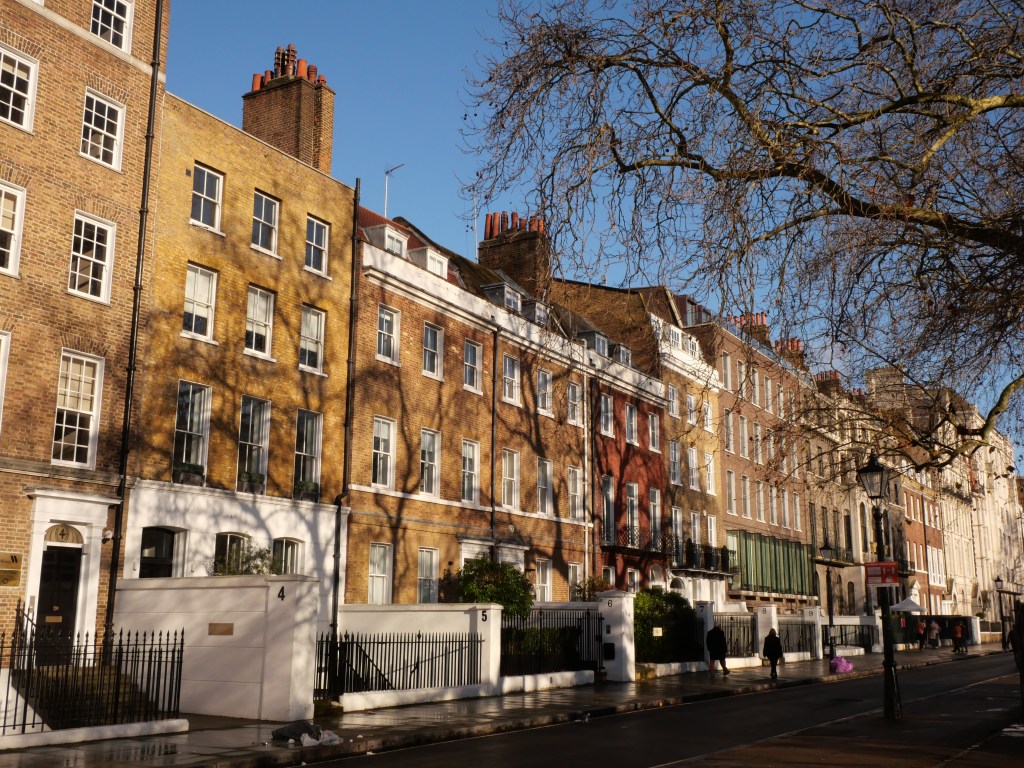
Modern day Holborn is a highly walkable district with convenient access to the plethora of professional jobs in the City of London along with the West end, Covet Garden, and the major train stations of King Cross & St. Pancras. The built environment of Holborn is mostly 4-7 story mixed use buildings built between the 17th-20th centuries with more monumental buildings along its southern edge (i.e. Fleet St., and the Strand). Holborn really excels at creating the type of mixed-use environment that Jane Jacobs so desired as most streets have some level of non-residential uses. This givens Holborn much more of a medieval feel where use types were much more flexible than even a turn of the 20th century NYC Manhattan neighborhood which tended to concentrate commercial uses on busy linear streets. This lends helps create a district with a vibrant retail, office, and cultural scene having a level of street activity far exceeding its 25K residents (per square mile) would typically justify. There are still some areas for improvement as bike infrastructure is limited to short segments, the tree canopy is concentrated only in parks, and a density of 25K people per square mile feels pretty underwhelming for a Inner City European neighborhood.
Click here to view my Holborn neighborhood on Flickr
URBAN STRENGTHS:
* Holborn is the major west-east corridor and is very active with pedestrian and bike activity. Bloomsbury & Kingsway are similar streets but with less activity and commercial uses.
* Red Lion/Lamb’s Conduit is a nice quasi intimate pedestrian street.
* Other good urban biz streets include Grays Inn, the Strand, and lots of other mixed-use blocks especially along the western edge.
* Major landmarks here include Temple Church, Kings College, Somerset House, Waterhouse Square. Sir John Soane’s Museum,
* Several great parks as well including: Lincoln’s Inn Field North Lawn Garden, B, Red Square Gardens, & Grey’s Inn Square.
* Even outside of the major landmarks architecture is comprised of largely gorgeous styles from the late 17th century-early 20th century with some more modern infill sprinkled throughout the district.
* Well connected to the Tube with 4 stations and 6 lines serving the district.
* Excellent cultural amenities here including tons of restaurants, bars, cares, museums, theaters, & cinemas. Great retail amenities as well. Everything is very convenient here. Great mixed-use fabric that would make Jane Jacobs proud.
URBAN WEAKNESSES:
* Decent amount of bike occurs here, but any bike lanes are very short segments.
* A bit on the touristy side but not overwhelming.
* Other than the park space tree canopy is pretty limited.
* Decent density (25K per square mile) and bit better than Farrington to the east but pretty low compared to most European central cities.

 Evaluating our Urban Communities [with a focus on America]