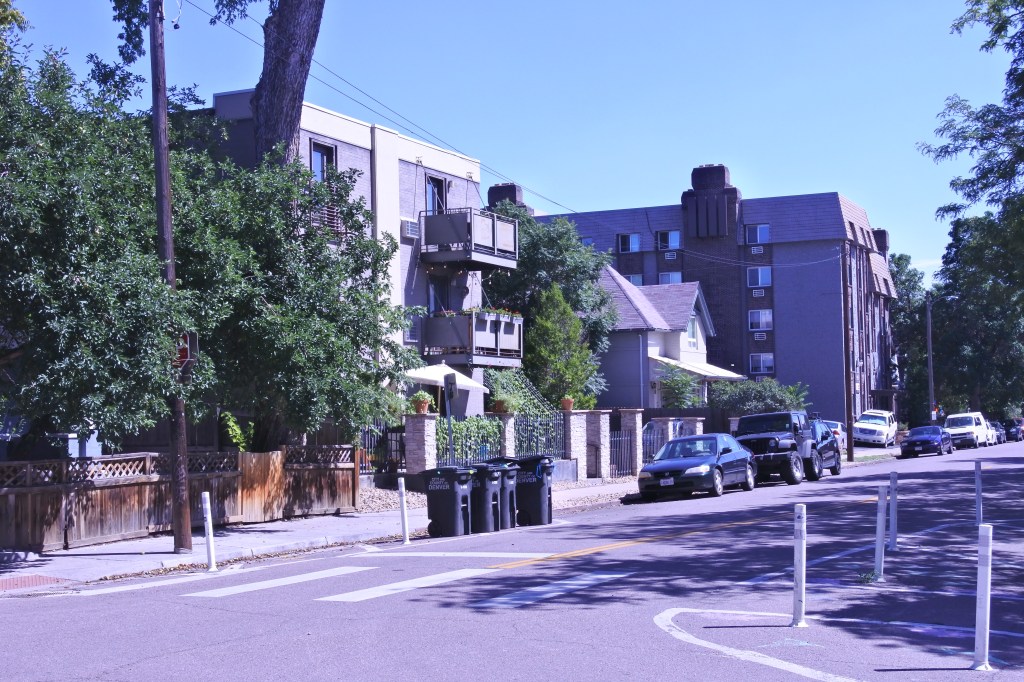
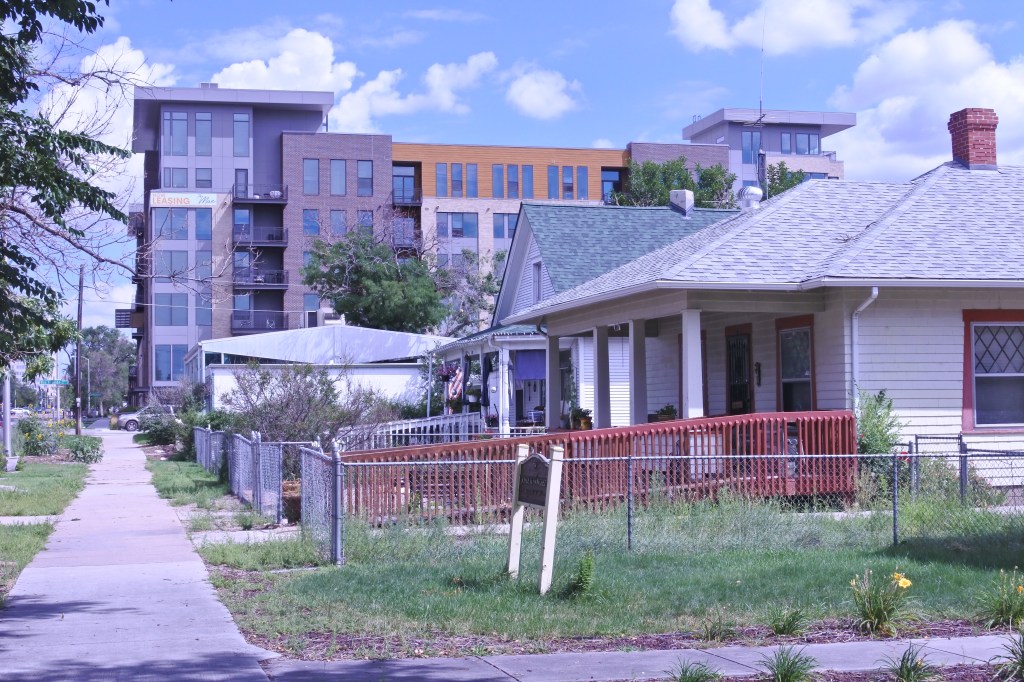
Speer- a solid mixed-use urban district hostings Denver’s Broadway Avenue

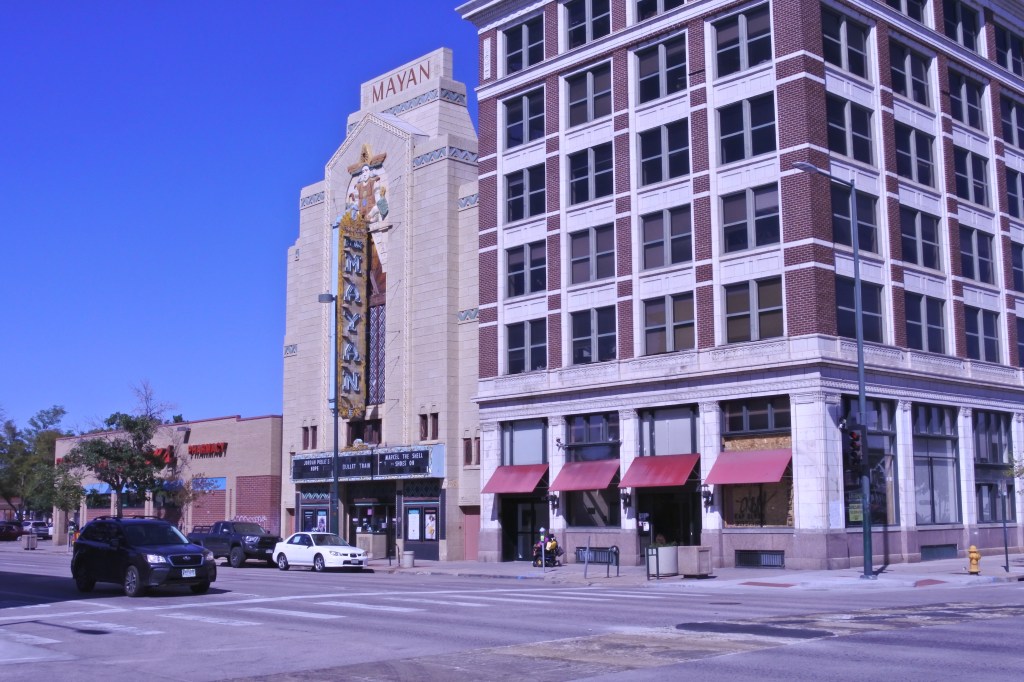
This solid Denver district was developed primarily between the 1890s-1930s. It has a typical Denver form with gridded streets and regular alleyways. But does better from an urban perspective than other adjacent Denver districts as it has the major Broadway Business District on its western edge, lots of mixed-use areas throughout, and is quite dense thanks to several 60s & 70s high-rises and the densification of the neighborhood, which has been in force since zoning changes were made by the state in 2010.

Speer also excels at being a truly multi-model district with great transit and bike infrastructure. While housing is generally expensive, Sheer offers a good amount of moderately priced condo options. Speer also has solid retail and cultural offerings particularly along the Broadway Corridor.

Areas for improvement include more high quality walkable schools, more park and recreation options, and filling in autocentric gaps particularly present along the northern and southern end of Broadway Ave and Almeda Avenue.

Click here to view my Speer album on Flickr

URBAN STRENGTHS:

* Great density especially for a district built up btwn the 1910s-1940s.
* Generally good sidewalk infrastructure but many curb cuts are outdated or broken.
* High quality public transit access. Good access to dwtn across all modes of transportation. Great system of dedicated bike lanes and decent access to the City’s bike share.
* Great economic diversity.
* For sale properties are also expensive but good variety and there are many condos in the district. Lots of studios and 1-bed condos selling in the 200KS-400Ks. Some are a bit more expensive.  Lots of 2-bed condos that range from 300-800K, 2-beds homes/townhouses are on average a bit more expensive. 3 & 4 beds homes sell btwn 600K-1.4 M.
* Lots # of rentals but on the pricy side. Studios 1-beds lease btwn low 1Ks to mid 2Ks, 2-beds mid 1Ks -3K. Some 3-beds available generally leasing in the 3-4Ks.
* Good tree canopy.
* Solid cultural amenities including many restaurants, bars, breweries, cafes, an indie theater and community theater, and plenty of live music venues & night clubs.
* Good retail amenities including a couple supermarkets on the SW edge, a couple drug stores, good # of boutiques and unique stores along Broadway, a couple bookstores, a couple banks, several dessert spots & gyms, plenty of salons, a post office and public library, and several churches.
* Solid architecture all around. Cute historic residential holds, quality residential neighborhood infill, and great historic comm. along Broadway.

URBAN WEAKNESSES:

* Racial and generational diversity are pretty limited here.
* Walkable access to a decent number of schools generally rated well.
* Decent park amenities including a community garden, the Hungarian Freedom Memorial, and recreational trail along the northern boarder.  The extensive Washington Park is only several blocks south of the district and the private Denver Country Club sits on the eastern border.
* Urban massing is generally good but some gaps on Broadway on the northern and southern end. Almeda is a mixed bag.

Downtown Denver, CO

For this  evaluation I combined the Union Station and CBD districts. Both districts have Dwtn qualities and naturally flow into one another.

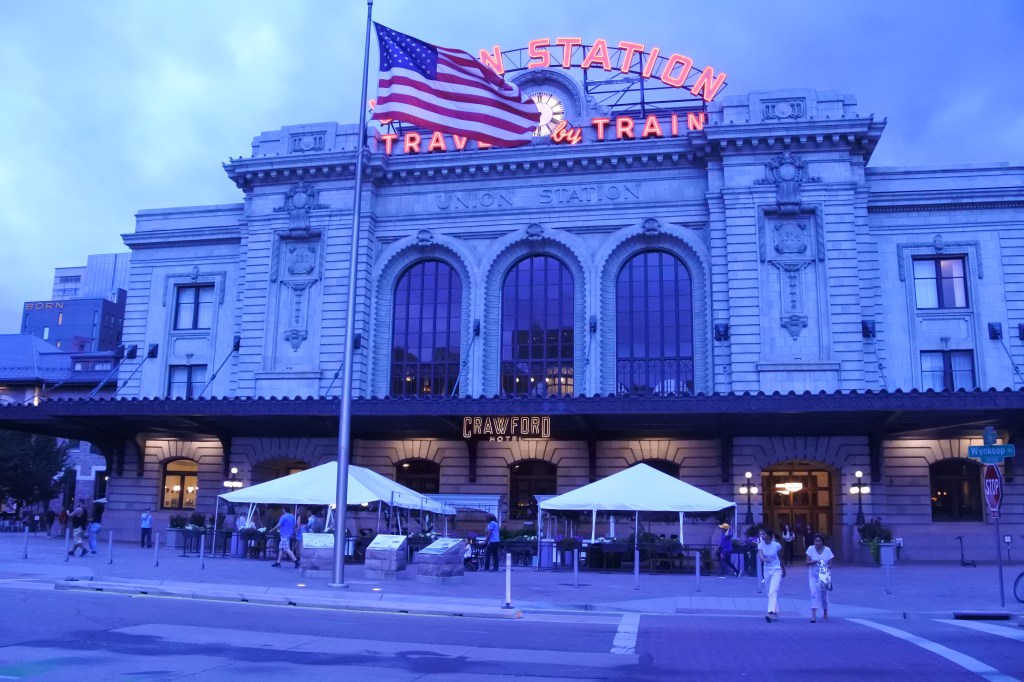
Dwtn Denver is home to the original site of the City at current day Confluence Park where the Platte and Cherry Creak rivers meet. This was founded in the late 1850s. Dwtn quickly grew as Denver became a boom  town housing the headquarters of many mining businesses operating in the Rocky Mountains. This produced a wonderful concentration of gorgeous turn of the 20th century historic architecture. As Denver became a major US city after WWII many corporate headquarters located here and modern high-rises naturally followed. In the 50s & 60s many Civic leaders desired to sweep away most of Downtown’s historic fabric with an ambitious urban renewal campaign. Fortunately, thanks to the tireless efforts of Dana Crawford, much of historic Downtown was saved, especially the Union Station (aka LoDo) area. Her first big win was the preservation of Larimer Square, a now vibrant mixed-use restaurant area. After this Dana went on to preserve the Union Station area and helped pull together Union Station’s revitalization as a major transit hub.

The 16th Street Pedestrian Street is also a major urban asset to Dwtn and one of America’s most successful pedestrian streets still lined with numerous retail and clothing stores. With Denver’s growth, blocks of blocks of dense mixed-use development were built between Union Station and the Platte River creating an urban environment on par with Portland’s Pearl District. McGregor Square and the Ballpark District are part of this area. There are still many surface parking lots on Dwtn eastern edge near Broadway ripe for new in-fill development.

Click to view my Denver CBD album and my Union Station Album on Flickr

URBAN STRENGTHS:

* Great density for a Dwtn area.
* Generally very good sidewalk infrastructure and ADA curbs throughout downtown.
* High quality transit within Denver and to many of its suburbs especially Lakewood & Aurora.  This is helped Denver’s several rail lines spurring out in every direction.
* Very  consistent gridded street system Dwtn.  Streets are pretty wide but only a handful of the main  streets are too wide (i.e. Broadway, Colfax, and  Market). Much of the width has been converted into a great bike lane system.
* The Denver region has a great dedicated bike system almost as good as West Coast cities. Good dockless bike and scooter system that covers most of urban Denver.
* Lots of for sale hsg options but certainly on the expensive end. Studios and 1-beds can range anywhere from 300K-1M but a good # of options btwn 300K-500K. 2-beds condos can range anywhere from 350K-2M Lots of diversity in product. Lots of 3-bed condos ranging anywhere from 650K-3 M. Some 4-beds that are even more expensive.
* Dwtn is generally safe besides a decent amount of homeless activity.
* Great array of small plazas and pocket parks Dwtn. Also an excellent trail along Cherry Creek and Speer Park and the expansive and multi-faceted Confluence park along Platte River.
* Union Station Square has been a quality Civic Heart of Dwtn. Very active, well designed and good # of events. 16th Mall is also a great plaza like space.
* Culturally great array of Food & Beverage biz, several theaters in the PA Complex, a Cineplex, many art galleries, several live music venues, and decent # of museums. 2 major sports stadiums Dwtn and a large Convention Center.
* Dwtn Employment is around 100K but closer to 130K when adding Golden Triangle.
* Great retail amenities w/ a target, a couple supermarkets, plenty of boutiques, Denver Pavilion Shopping Mall, plenty of banks, and plenty of other retail.
* Great university presence with ~ 40K on the western edge of Dwtn.
* Great vibrancy and mixed-use character.

URBAN WEAKNESSES:

* Scooter regulation is a real issue in Denver. Scooters rides frequently use sidewalks and create a rather uncomfortable walking environmental for pedestrians.
* Some racial diversity living Dwtn but much lower than the City as a whole.
* Not a very kid friendly dwtn nor do many reside Downtown.
* Really no schools within the Dwtn area but several decent options on the edges of Dwtn.
* Great supply of rentals but pricey. studios and 1-beds lease btwn the mid 1Ks-mid 3Ks. 2-beds btwn the high 1Ks to 4K. Good # of 3-beds generally leasing in the 3Ks & 4Ks, some are more expensive.
* Some government offices Dwtn but many of them are just south of Dwtn in the Golden Triangle area.
*Good # of surface parking along Downtown’s eastern edge near Broadway.

Southeast Colorado Springs- The City’s Historically Working Class District

This district wraps around Dwtn on the South and Southwestern sides. I therefore used Union St as the Eastern border, Platte Blvd and Cimarron as the north borders, Wahsatch as the western border and included the area directly south of Dwtn below Cimmarron but cut out anything south of Fountain St. as its pretty industrial.

Historically the Southeast Side has always been the working class part of town. This legacy certainly continues into the current day as the Southeast Side has more modest housing and affordable housing than the rest of the City and seems to be the part of the City with them most Crime (albeit pretty average for national standards). But I consider the district to be pretty well stabilized as the real estate market is robust and vacancy and blight is now limited.

Thanks to its close proximity to Downtown I ranked the Southeast Side the second best urban district in Colorado Springs. It has decent retail & cultural amenities especially with a strong mixed-use character close to Dwtn. The neighborhood has good economic diversity, likely the best economic diversity in the City, excellent park amenities and good ADA and sidewalk infrastructure throughout. But similar to other neighborhoods in Colorado Springs, the SE side’s density is very low, public transit is so so, good walkable schools are limited, and the eastern half the district is mostly residential. 

Click here to view my Southeast Colorado Springs

URBAN STRENGTHS:

* Great access to Dwtn as about half the residents of the Southeast Side can walk to Dwtn.
* ADA and sidewalk infrastructure is generally good but becomes more inconsistent the further east you go.
* Decent but not great historic housing. Generally pretty modest homes esp. in the eastern reaches of the district.
* Good economic mix here but much many more lower income households than north and east of Dwtn.
* Pretty good racial diversity hosting a good # of Blacks and Hispanics.
* Great bike amenities here including an excellent set of dedicated bike paths and many dedicated bike stations.
* Excellent park amenities including South Shooks Run which runs north to south and along the southern boundary of the neighborhood, the extensive and multi-faceted Memorial Park, Dorchester Park, and the Recreation Center at Fountain Park.
* Decent amount of affordable housing.
* For Sale Housing is cheaper here than northern and eastern Colorado Springs. Studios and 1-beds can range btwn 250K-500K depending on age & condition. Condos options close to Dwtn. 2-beds range from 275K-600K with some condos near Dwtn. 3 & 4-beds  300K-800K. Only a handful of homes on the higher end.
* Overall solid cultural amenities particularly just south of Dwtn. Good # of restaurants, bars, cafes & breweries, a handful of art galleries. Half of the neighborhood is also within walking distance of Dwtn providing convenient access to many other cultural amenities.
* Good urban massing south of Dwtn esp. along Tejon pretty bad along Wahsatch and the industrial western edge of the South East side.

URBAN WEAKNESSES:

* Low density for an urban district.
* Public transit is okay.
* Some crime issues in Southeast Colorado Springs especially proportional to the rest of the City. But compared to most American cities crime really isn’t too bad.
* Some walkable schools in the Southeast side but most are not well rated.
* Some rentals, particularly closed close to Dwtn. Studios & 1-beds and 2-beds range anywhere btwn 1K and the mid2Ks depending on location and condition. Good 3 # of 3 beds that range from the high 1Ks to the low 3Ks.
* So  retail amenities including a small grocery store, a drug store, a couple banks, many churches, several salons & dessert joints, a bookstore and antique shops. 1/2 of the neighborhood has convenient access to retail amenities dwtn as well. UC Health Hospital is along on the eastern edge of the district.
* In fill is a mixed bag. Some good urban in-fill south of Dwtn. Some auto centric crud esp. along Wahsatch Ave.

The East Side of Colorado Springs- A pleasant semi-urban neighborhood

For this evaluation I used the stream/bike trail as the northern border, Wahsatch Ave as the western, Union St as the eastern, and Platte Ave as the southern border.

East Colorado Springs was born out of the second period of annexations was during 1889-1890.  The neighborhood continued to fill up through WWII. Because of its development history there are many cute bungalows and other modest older homes along with consistent sidewalks and pretty good connectively. But largely due to its low population density, retail amenities are sparse, and there is not real cohesive business district other than a couple auto centric stretches along Union Street.

I consider East Side a pleasant semi-urban place, but not a 1-car neighborhood due to the lack of walkable amenities and so so  public transit service. Obviously my hope is that the neighborhood can densify and eliminate its single family only zoning, which I suspect occupies the majority of the neighborhood.

Click here to view my East Side Album on Flickr

URBAN STRENGTHS:

* Two wonderful bike trans along the western and north edge of Dwtn. Decent number of bike stations.
* Good sidewalk infrastructure overall; hit or miss with ADA curb cuts.
* Great economic and generational diversity.
* Decent # of schools with pretty good ratings; semi-walkable as the district is so spread out.
* Decent # of rentals but not a ton. 1-beds lease btwn the mid 1K to mid 2Ks. More 2-beds available at a similar price. Good # of 3-bed rentals that are a bit more expensive.
* Some affordable housing in the neighborhood.
* Good array of parks including Shooks Run that runs north-south through most of the district. Recreational trail along it and several smaller parks. There is also Boulder Park (a medium sized park) and the extensive Memorial Park just south of the East Side borders.
* Attractive historic housing, but nothing spectacular.
* Excellent Tree canopy.

URBAN WEAKNESSES:

* Density is pretty low for an urban era.
* Public transit is decent is spots but pretty mediocre/ poor in the northeast section of East Side.
* Walkability overall is ok. Very spreadout district with not a lot of amenities within walking distance.
* Racial diversity is pretty limited.
* For-sale are pretty expensive. Decent # of one-beds that sell btwn 300K-500K, 2-beds btwn 300K-700K, wide arrange of  3 & 4 beds selling anywhere btwn 400K-1M. No condos here. No sign of affordable hsg here.
* Cultural amenities in the East Side are pretty limited. Some restaurants & cafes but mostly located along Union Blvd which is very auto centric oriented. A couple nice cafes and breweries in the SW corner of the district close to Dwtn. A couple art galleries, community theaters, and live music venues. Decent access in the SW corner to Dwtn cultural amenities.
* Some retail amenities including a Safeway & Walmart, a major hospital, drug store, a couple salons, a couple dessert joints, a few gyms, several churches, and some other random retail. The issue is that most retail is auto centric and very spreadout.
* Sense of place is certainly lacking here as there are no urban business districts.
* Good amount of auto centric crap in-fill especially along Union Blvd.

Downtown Colorado Springs, CO

For this evaluation I used the stream/bike trail as the northern border, Wahsatch Ave as the eastern, Monument Creek as the western, and Dwtn (Unitah) as the southern border.

Old North End was developed for middle and upper-class people in the late-nineteenth century. Much of this architecture is preserved in a historic district characterized by Spanish Colonial Revival, Georgian Revival, and Mission architecture styles. The bulk of the neighborhood’s growth came between 1890 and 1910 largely due to the success of the gold mines in Cripple Creek and Victor and resulting industry in Colorado Springs.

From an urban perspective Old North End is a pleasant semi-walkable residential community with well shaded streets, great park and trail access, plenty of bike lanes, and convenient access to Dwtn. But due to a low-population density there is no cohesive business district and mixed-use development is largely elusive. Public transit also isn’t great here and walkable school options are limited. Along with densifying the district, I would also like to see a better infusion of diverse and affordable housing options.

Click here to view my Downtown Colorado Springs album on Flickr.

URBAN STRENGTHS:

* Overall very consistent sidewalk and ADA infrastructure.
* Great gridded Dwtn.
* Great dedicated bike lane system connecting dwtn, inner city neighborhoods, and suburban areas. Also a decent dedicated bike station system covering Dwtn, areas close to Dwtn and Old Colorado City.
* Great economic diversity living dwtn and decent racial and generational diversity. High number of family households for a dwtn but so  amenities for kids.
* Decent school options including a public high school and middle school. A couple small private options too.
* Good amount of affordable housing Dwtn.
* Great parks Dwtn including the expansive Monument Valley Park with lots of trails and greenspace and America the Beautiful Park. Acadia Park functions as a decent Civic Heart hosts concerts, ice skating, a splash pad and is located right off Tejon St (Dwtn’s main drag). A couple other smaller parks dwtn too.
* Overall a very safe Dwtn some dead spaces in the western edge of Dwtn.
* Pretty good university presence with about 5-6K college students Dwtn btwn Colorado College, Pike Peak and a couple others.
* Even though there are a lot of dead spots and poor bldg massing dwtn, the streetscaping is pretty good, esp. along Tejon.
* Culturally a nice array of restaurants, cafes, and bars. Also a couple community theaters, a small movie house, several live music venues, art galleries & museums, and plenty of night clubs and a major performing arts center. Also several arenas Dwtn (i.e. hocky, baseball).
* Good # of jobs dwtn at around 25-30K.
* Good retail w/ Plenty of boutiques, consignments and clothing stores, plenty of gifts stores, a toy store, several bookstores, plenty of dessert stores & gyms, lots of salons & barber shops, a public library, dwtn post office, and tons of churches.

URBAN WEAKNESSES:

* So  density.
* Streets are generally too wide but few one way street Dwtn and lots of bike lanes.
* Public transit access is pretty limited in Colorado Springs. Decent service only exists Dwtn and to the north and east. Good transit connection at least from Dwtn to the airport.
* Rentals are pretty limited for a Dwtn area. Some 1-beds generally leasing in the low 1ks but a few luxury options too. Decent # of 2-beds leasing btwn the low 1ks-the mid 2ks. Few 3-beds leasing around 2K.
* Decent # of condos but on the pricey side. 1-beds sell btwn 300K-600K, 2-beds 400K-750K, decent # of 3-beds as some SF homes are available dwtn selling btwn 450K-800K. Even some  4 beds available.
* Rather bland and uninspiring skyline. Mostly short-medium sized square boxes from the 60s-90s.
* So  architecture with some nice historic buildings along mostly Tejon street and a nice historic district on the northern edge.
* Dwtn has its share of dead spots especially the western edge, but decent vibrancy along Tejon. Lots of surface parking, auto centric uses and 1 story manufacturing bldgs along the western edge of Dwtn.
* No major convention center dwtn.
* No supermarket nor drug store. The nearest hospital is also a couple miles away.

Colorado Springs, CO- Old North End

For this evaluation I used the stream/bike trail as the northern border, Wahsatch Ave as the eastern, Monument Creek as the western, and Dwtn (Unitah) as the southern border.

Old North End was developed for middle and upper-class people in the late-nineteenth century. Much of this architecture is preserved in a historic district characterized by Spanish Colonial Revival, Georgian Revival, and Mission architecture styles. The bulk of the neighborhood’s growth came between 1890 and 1910 largely due to the success of the gold mines in Cripple Creek and Victor and resulting industry in Colorado Springs.

From an urban perspective Old North End is a pleasant semi-walkable residential community with well shaded streets, great park and trail access, plenty of bike lanes, and convenient access to Dwtn. But due to a low-population density there is no cohesive business district and mixed-use development is largely elusive. Public transit also isn’t great here and walkable school options are limited. Along with densifying the district, I would also like to see a better infusion of diverse and affordable housing options.

Click here to view my Old North End Album on Flickr

URBAN STRENGTHS:

* Very convenient access to Dwtn.
* Good bike infrastructure with several dedicated lanes and a handful of bike share stations. This includes 2 recreational trails.
* Solid diversity all around- especially economic and generational.
* Good park space including the extensive Monument Valley park running along North End western edge. There is also Shooks Run trail and Bonforte Park.
* Very safe community. Limited blight as well.
* Sidewalk infrastructure is great. ADA infrastructure is generally good; often curb cuts missing at alleyway crossings.
* As there is no business district limited spots with a sense of place or landmarks in Old North End.
* Quality historic homes.

URBAN WEAKNESSES:

* Density is pretty low but better than other parts of Colorado Springs.
* Public transit isn’t great.
* Cultural amenities within Old North End are limited to really only a couple cafes and restaurants, but good access to the performing arts at Colorado College living on its southern border and the many amenities in Dwtn located 1-2 miles away.
* Similar situation with retail amenities, only a dentist, a couple of churches, a Safeway supermarket, major hospital drug store, hardware store, a couple of salons, UPS store, and a couple of banks. But good retail amenities dwtn.
* Schools are limited to a Catholic HS and well rated public elementary schools. Schools in adjacent neighborhoods are generally to far to walk to.
* Apts are pretty limited. A handful of 1 beds leasing around 1.5K. Some 2-beds leasing in the high 1Ks, and a few 3-bed homes leasing anywhere btwn 1.8K to 3K.
* For-sale are pretty expensive. Only a handful of one-beds that start at 350K, 2-beds btwn 400K-750K, wide arrange of  3 & 4 beds selling anywhere btwn 400K-1.5M. No condos here. No sign of affordable hsg here.
* In fill is very limited and what does exist is general auto centric.
* Pedestrian activity is limited.

Old Colorado City- Colorado Springs’ original settlement

This evaluation includes both Old Colorado City and the small district between Old Colorado City and Dwtn. I used 31st as the western border, Cimmarron as the southern, Uintah St as the northern, and 142 as the eastern.

Old Colorado City, formerly Colorado City, was once an independent town, but is now a neighborhood within the City. It was founded during the Pikes Peak Gold Rush of 1859 and was involved in the mining industry, both as a supply hub and as a gold ore processing center beginning in the 1890s. Residents of Colorado City generally worked at the 50 coal mines in the area. It was briefly the capital of the Colorado Territory.  Its beginnings were certainly a rough and tumble place hosting many saloons and brothels. But in time local regulations curbed the worst of these vices.

Most of the historic structures of Old Colorado City have been preserved thanks to a Historic Preservation ordinance in 1982. Further east on Colorado Ave. the business district is more mixed-use but retains decent urban form. The residential areas are historic but mostly single family. Some new apartment buildings are being built in the near West Side district. With a density of 3,500 per sq mile, Old Colorado City could certainly use more density. It also lacks racial diversity, and quality public transit. A good number of schools exist but with mixed ratings. 

Click here to view my Old Colorado Springs album and here for my West Side Album

URBAN STRENGTHS:

* Convenient access to Dwtn across all modes, although public transit is a bit wanting.
* Several convenient bike lanes feed into Dwtn.
* Great economic diversity and solid generational diversity.
* Decent # of apts. Some 1-beds. Generally rent in the low 1Ks. Plenty of 2-beds, which rent btwn the low 1Ks-2K, 3-beds lease around 2K.
* Pretty good for-sale diversity but a bit on the pricy side.: 1-beds sell anywhere btwn 250k-650K, 2-beds btwn 300K-750K, 3 & 4 beds btwn 350K-850K. No condos here.
* Good # of parks and well disbursed. Also an nice recreational path along Fountain Creek.
* Great cultural amenities including many bars, restaurants, cafes, and breweries. Also several art galleries, 2 community theaters, several small museums/historic sites, and a couple live music and night club venues.
* Overall a pretty safe community.
* Solid historic architecture especially along Colorado Ave in the core of “Old Colorado City”. Some new mixed-use infill springing up that’s decent.
* Good retail amenities including a couple grocery & drug stores, lots of boutiques & gift stores, and unique stores esp. in Old Colorado City; several banks, a couple bakeries & gyms,  a local book store and library, several churches. and a book store.

URBAN WEAKNESSES:

* Density is low, more akin to a suburb.
* Bike share doesn’t extend out to the West Side
* Mediocre transit access. Pretty limited considering the close proximity to Dwtn.
* Racial diversity is pretty limited but not terrible… 15% minor population with a decent sized Hispanic population.
* Decent # of schools but mixed-ratings and all K-8.
* Good vibrancy along Colorado Ave in Old Colorado City, but the rest of the neighborhood is pretty dead.

Downtown Boulder, CO

Downtown Boulder is built around its very vibrant pedestrian main street (Pearl Street) that cuts east to west through the heart of the Downtown area. The Pearl Street Pedestrian Street is one of America’s best. Generally good urban form surrounds Pearl Street.

Click here to view my Dwtn Boulder Album on Flickr

URBAN STRENGTHS:

* Arguably the best pedestrian street in America along Pearl Street
* Tons of shops and food & beverage businesses along Pearl Street.
* Generally quality urban in-fill. Boulder started building quality urban in-fil in the 80s, way ahead of most urban areas in America.
* Good array of historic architecture.
* Spruce Street is a decent secondary dwtn main street.
* Wonderful urban park and recreational  at the southern border of Downtown along Boulder Creek. Very thoughtful layout and design.
* The western edge of Downtown is the attractive West End Historic District. Pearl street continues here as a nice villagy biz district.
* Surface parking lots are limited.

URBAN WEAKNESSES:

* Walnut Street has decent urban form but feels very corporate, cold, and pretty lifeless.
* Limited taller buildings and skyline. Dwtn footprint is rather small.
* Core of Dwtn isn’t very dense with population.

Downtown Buffalo, NY

My evaluation of Downtown Buffalo includes the entire area between Elmwood and Michigan from west to east and Tupper St to the north south to the Buffalo River. In the Southwest corner of Dwtn where Elmwood Ave turns to the Buffalo Skyway as it doglegs right, I draw an imaginary straight line south to Erie St and thus catch more of the waterfront in this evaluation.

One can tell that Downtown Buffalo was once a grand City by the Historic Architecture still largely in tact. Downtown has a wonderful array of antique skyscrapers (i.e. City Hall, the Electric Tower, Guaranty Bldg, Rand Bldg, Liberty Bldg, etc.). Buffalo’s Art Deco City Hall is one of my favorite City Halls in America. But Downtown Buffalo has struggled to built momentum even since the return to the City movement of the 1990s. Apartment bldg conversions have been limited, the Main Street pedestrian mall conversion of the 70s and construction of Main Place Mall largely failed, and much of Dwtn has languished and feels pretty dead after 9-5 work hours.

Things started to improve for Downtown Buffalo since 2014 with the Canalside development opened new apartment bldgs, office space, and the a new hocky area. This is south of what I consider the core of Dwtn Buffalo. More recently, a plethora of residential conversion and new projects have been announced for the core of Downtown. Main street is being converted back to car traffic (fortunately with major streetscaping and renovation dollars fixing its mostly in-tact but often vacant building stock). Downtown Buffalo still has a long way to go to catch up to the likes of Dwtn Cleveland, Buffalo, Cincy, and Pittsburgh but it seems poised to make significant progress in the 2020s.  

Click here to view my Downtown Buffalo Album on Flickr

URBAN STRENGTHS:

* ADA infrastructure is generally good but some under invested intersections at the edges of Dwtn with proper curb cuts.
* Downtown Buffalo serves as a solid huge for public transit in the region. At least good public transit through the entire City of Buffalo. This extends a bit to the inner ring suburbs but quickly drops off.
* Good connectively in Dwtn and a nice set of diagonal streets similar to Detroit (but not as good). Lots of wide street s though. Fortunately most of them are 2-ways many have bike lanes on them.
* Dwtn has a nice array of bike lanes. Within the City there is great bike lane coverage along the lake, which extends well north of the City. An ok # of bike lanes in the City. Not great coverage in the suburbs. Great bike share system covering about 60% of the City and extending to some of the northern suburbs.
* Generally good diversity dwtn reflected in its residential demographics and activities. Plenty to do for kids with the AAA ballpark, children’s museum, ships, and other museums.
* Nice concentrations of schools across all grades. Mix bag with ratings.
* Decent college presence dwtn with several smaller colleges adding up to an enrollment of about 5K.
* Pre-pandemic Buffalo had about 50K jobs, a high number for its metro size. Total office space was pretty flat pre-pandemic and vacancy pretty height at ~25%.
* Dwtn is a major gov’t jobs center helped with its large Art Deco City bldg and several court houses. It also hosts a convention center, ballpark & NHL hockey arena & a smaller hocky arena next door. Historic post office is no longer a post office. Large modern library.
* Culturally many theaters (many historic), a cineplex, lots of live music venues & night clubs, plenty of restaurants, bars & cafes, several art galleries, and many museums.
* Great historic architecture. One of the best for its size.
* Buffalo generally holds its urban form together. Only a few streets like Main street are mostly in-tact but most areas of dwtn have over 60% of bldgs remaining. The eastern and southern edges host the most surface parking and low intensity bldgs.

URBAN WEAKNEESES:

* Density is pretty low here. Not a ton of hsg in Dwtn Buffalo.
* For sale housing is pretty limited in Dwtn. Not even any studio options. Some 1-beds (esp. near the waterfront), these sell btwn 200K-350; 2-beds sell btwn 300K-800K, 3-beds are concentrated along the waterfront and sell btwn 500K-1.2M.
* Rentals are very limited for a dwtn area but at least are moderately priced. 1-beds lease  in the low 1Ks, 2&3 beds 1.5K-3K.
* Parks are pretty underwhelming Dwtn. There are a handful of nice smaller parks (i.e. Lafayette, Fireman’s, Niagara Sq, Fountain Plaza & Roosevelt) but nothing is outstanding. Decent park at Canalside a waterfront trail for about 1/4 of a mile.
* Fountain Plaza is Buffalo Civic heart but is pretty mediocre in my opinion. The fountain takes up more than half of the space. Some seating and another fountain.
* Pedestrian activity dwtn is so .
* Buzz is slowing growing for Dwtn Buffalo but its coming from a pretty low point. Locals have loathed their Dwtn for a long time.
* Retail amenities are a bit limited dwtn. The best amenity is a local supermarket. Dwtn has a drug store, a handful of boutiques & clothing stores, several banks & dessert joints, plenty of gyms & churches, and decent access to Buffalo General a mile away. Retail amenities dwtn went downhill when the Main Place Mall closed.
* Modern in-fill Dwtn is so . Handful of mid century towers, a couple 80s/90 office bldgs, and some better modern in-fill at Canalside. The Convention Center and the Main Place Mall are examples of unattractive 1960s-1970s in fill.

Allentown- Buffalo’s hippest spot and most walkable neighborhood

Allentown is named after Lewis F. Allen who came to Buffalo in April 1827 to serve as Corporate Secretary and financial manager of an insurance company. Allentown is the first neighborhood north of the Downtown Buffalo core. Its also the first Buffalo neighborhood to experience major revitalization and is known for its community of artists, bohemian and hipster culture, and for a strong commitment to preserving its historic building stock. Allentown is also Buffalo’s premier area for nightlife, music, dining, and antique shopping.

Not surprisingly this is also one of Buffalo best urban districts. As one of the few Buffalo neighborhoods from the 1860s-1900s that is still in tact, Allentown has a great mixed-use and compact feel. As it is only about a mile from Dwtn, I consider this Buffalo’s most walkable neighborhood. All things considered Allentown is pretty moderately priced considering these amenities.

To truly become a great neighborhood Allentown needs more in-fill housing to increase its density (currently sitting at just short of 9K residents per sq mile), redevelop the parking lots sitting at its border with Downtown, add more parking amenities, improve its ADA curbs at about 25% of its intersections, and be a more conducive district to families.

Click here to view my Allentown album on Flickr

URBAN STRENGTHS:

* Allentown is located just north of Dwtn. The median distance is about 1 mile allowing one to walk there. Also very convenient transit and bike access. Decent public transit access to the University of Buffalo.
* Great public transit access.
* Solid bike infrastructure including a couple north-south bike lanes and good bike share coverage.
* Great racial diversity and solid economic.
* Generally a good array of walkable schools within or near Allentown with pretty good ratings.
* Good array of rental options generally at moderate prices. studios & 1-beds lease btwn 900-1.6K, 2&3-beds 1.2K-2.5K. Good amount of affordable housing here as well.
* Nice mix of for-sale housing options.  1-bed condos that sell around 200K, 2-beds range anywhere btwn 200K-500K, 3 & 4 beds btwn 300K-800K.
* Great array of historic architecture ranging from the Post Bellum period to the early 20th century.
* Wonderful cultural amenities including many restaurants, bars, cafes, a couple breweries, many live music venues & night clubs, great access to Dwtn’s theater district located a block away, several historic sites, and several art galleries.
* Good retail amenities as well including a supermarket, a couple drug stores, several boutiques & consignment stores, banks, plenty of unique stores & antique shops, a hardware store, good array of gyms & dessert shops, a local post office, several churches and Buffalo General Hospital. This is certainly Buffalo’s most mixed use neighborhood.
* Overall very good urban massing and streetscaping. Southern edge, however, has a lot of parking lots and underutilized spaces next to Dwtn. 

URBAN WEAKNESSES:

* So  density. Less than other North and West Buffalo neighborhoods.
* Generational diversity is pretty limited. Pretty few households with Children here. Most residents are young adults.
* Tree canopy is good but not as good as other North Buffalo neighborhoods.
* A couple nice smaller parks but no larger parks here.
* Generally good ADA infrastructure but about 1/4 of all intersections are missing ADA curbs.