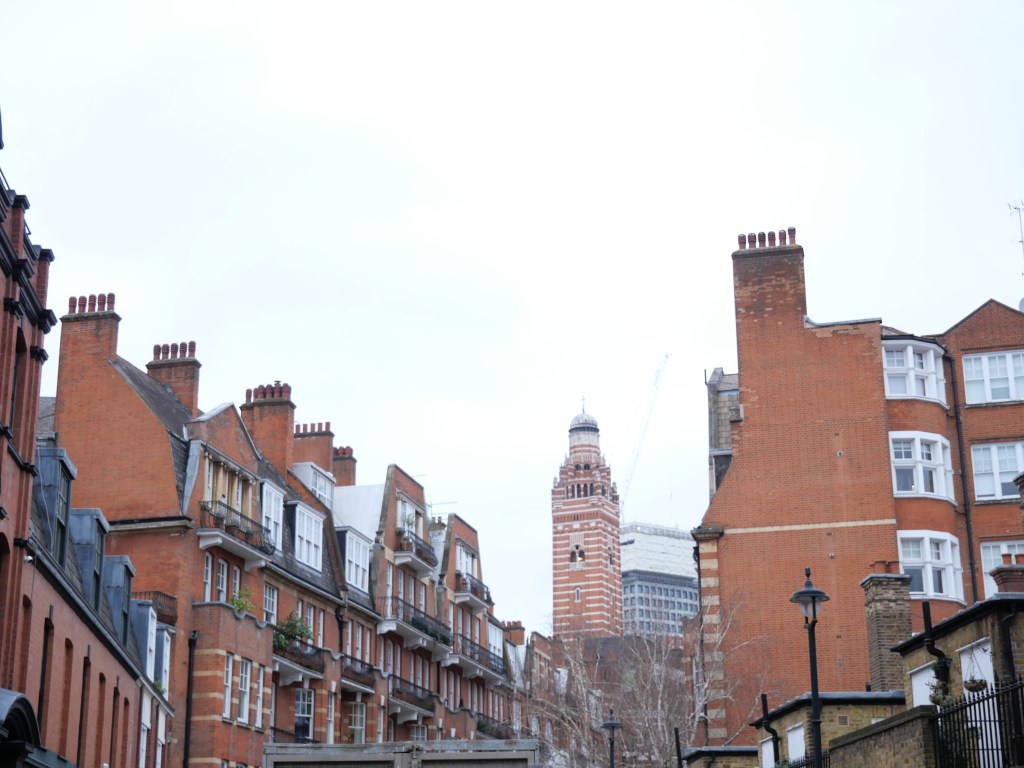
Pimlico is known for its garden squares and distinctive Regency architecture (a subset of Georgian architecture most popular in the first half of the 19th centry). At its heart is a grid of residential streets laid down by the planner Thomas Cubitt (a highly influential West London builder) beginning in 1825 and now protected as the Pimlico Conservation Area. By the 19th century as a result of an increase in demand for property, Pimlico become ripe for development. In order to be able to build in Pimlico excavated land from the St. Katharine’s Docks had to fill in the naturally marshy land running along the Thames. The largest and most opulent houses in the White Stucco Terrace style were built along St George’s Drive and Belgrave Road. Pilmico became a fashionable district in the 19th century yet by the late 19th century pockets of slums popped up. This led to the construction of the urban renewal project of Dolphin Square in the 1930s. Fortunately Pimlico survived the war mostly intact, although parts were bombed (especially near the river) had to be rebuilt (i.e. Churchill Gardens, Lillington and Longmoore Gardens estates). Most of the larger Victorian houses were converted to hotels and other uses in the Post War era as well as Pimlico decline a bit. However the district’s decline was brief thanks to Pimlico’s connection to the London Underground in 1972 and the creation of a large conservation district in the neighborhood in 1968. Since this era, Pimlico has steadily improved, but fortunately due to its large number of post War Housing the area has a decent social mix.
From an urban perspective this is a solid, walkable district. While not the most convenient to West and Central London, Pimlico still posts attractive mixed-use districts just east of Victoria Station along Upper Tachbrook, Warwick Way, Churton, and Wilton Streets. Pimlico also has attractive, mostly 19th century terrace/rowhouse styles, better bike lane infrastructure and tree canopy than most Central/West London districts, pretty economically diverse population for West London and very high density at around 45K residents per square mile. This biggest area for improvement is creating more accessible park space, as most of them are private.
Click here to view my Pimlico Album on Flickr
URBAN STRENGTHS:
- Several nice pedestrian/narrow road biz districts including Upper Tachbrook, Warwick Way, Churton, Wilton (which connects with the busy Victoria Station node). Also wider streets with a decent amount of mixed-use fabric including Vauxhall Bridge and Lupus.
- Incredible 19th century terrace homes. Brick or white rowhouses.
- Decent bike lane system (at least for London) including two east to west dedicated lanes.
- Pretty good public transit access including 2 subway station connected to 3 subway lines.
- Tree Canopy throughout Pimlico is decent thanks to all the greens, squares, and public housing sites spreadsheet throughout Pimlico.
- Good cultural amenities but concentrated close to Victoria Station along Churton, Wilton, & Warwick. This includes plenty of restaurants, bars & cafes. Across the district there are a handful of smaller art galleries, and a handful of performing arts theaters.
- Pretty good array of retail amenities as well with the more creative boutiques, clothing stores, and gift stores concentrated near Victoria Station.
- Very dense population for London standards at around 45K residents per square mile.
- For West London standards Pimlico is a pretty economically diverse district thanks to several large multi-block apartment buildings built in the mid 20th century.
URBAN STRENGTHS:
* Major post WWII/urban renewal sub district in Church Hill Gardens done in the Garden City style with tall towers sticking up as islands in a park space and parking lot. But could be a lot worse esp. considering how these look in the US.
* Plenty of quality squares and gardens throughout Pimlico but sadly most of them of private spaces along available to adjacent residents. Nice park space along the river however.


